📑 On this page
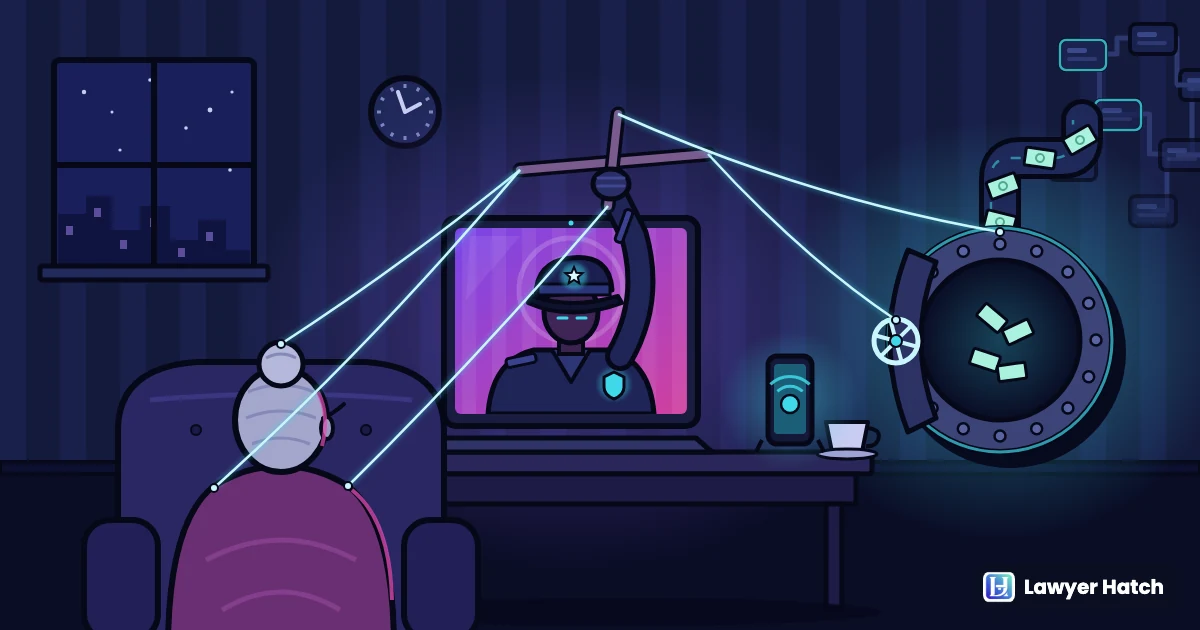
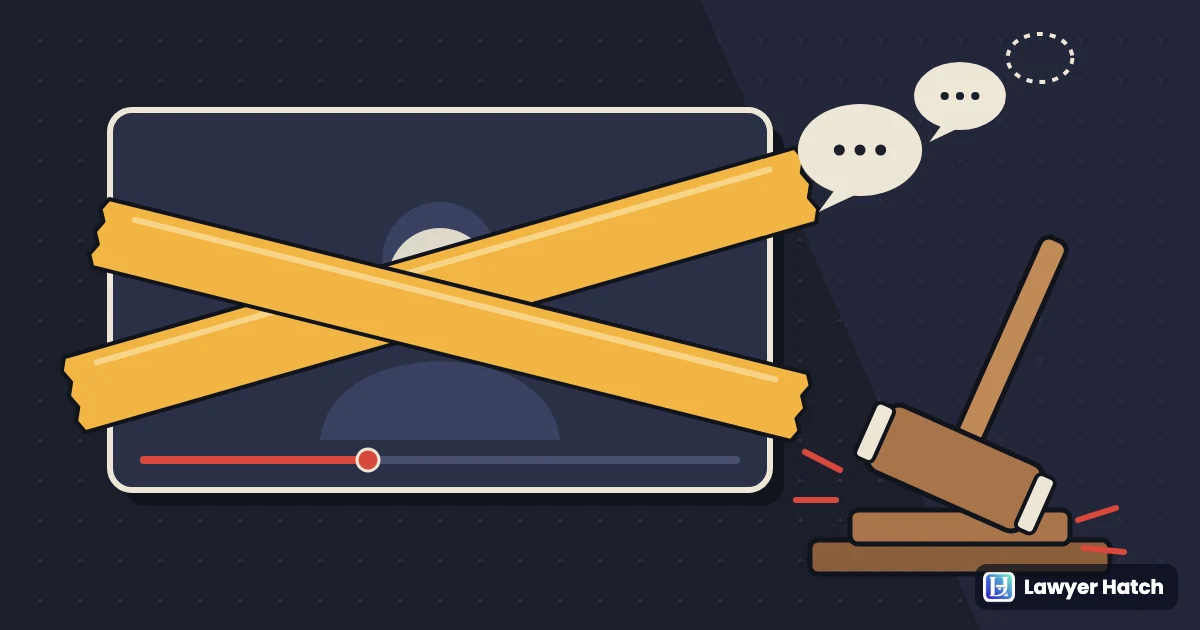
On 26 October 2026, the Calcutta High Court ordered YouTube, X and Instagram to take down a 36-minute video by Hotmail co-founder Sabeer Bhatia about the Adani Group, and barred him and anyone acting with him from sharing it. Nothing has been proved yet. The defamation suit filed by Adani Enterprises has not even reached trial.
That is what makes the order worth studying. Courts usually decide whether a statement is defamatory after hearing both sides and weighing the evidence. Here, a court stopped the speech first and left the full hearing for later, through what lawyers call a pre-trial or interim injunction.
For a CLAT aspirant, this is a ready-made Legal Reasoning passage: free speech against reputation, fact against opinion, and the internet-age question of who decides what comes down, and when.
- The order: Justice Aryak Dutt granted an ad-interim injunction (a temporary order made at the very first stage of a case) barring the video, its clips and close copies until 31 January 2027 or further orders, whichever is earlier.
- The platforms: YouTube, X and Instagram must disable the video at 39 listed URLs, block the reposts and shares that lead to it there, stop ads on it, preserve uploader logs and file compliance affidavits within two weeks.
- The test: the court applied the Supreme Court's 2024 ruling in Bloomberg v. Zee: a pre-trial gag in a defamation case is only for exceptional cases, where the content is prima facie malicious or palpably false, with reasons recorded.
- The five reasons: a dramatised narrative, not a news report; assertions of fact, not opinion, with no finding by any authority behind them; the original already disabled after a Government complaint; a repost after that; and the company named again and again.
- Still open: almost everything. The findings are only prima facie, Mr Bhatia's reply is yet to be filed, and the matter returns before the regular bench in January 2027.
The backstory
Every defamation case is a collision of two rights. One is free speech, which covers news reports, satire, podcasts and angry YouTube essays alike. The other is reputation, which the Supreme Court has treated as part of the right to life itself. The Constitution expressly allows reasonable restrictions on speech in relation to defamation, so a false and damaging statement is not protected just because it is speech.
Defamation comes in two forms. As a civil wrong (a tort), the person defamed sues for money and, sometimes, an order stopping the publication. As a crime, the speaker can be prosecuted and punished. The Adani suit is civil. In both, a company can be defamed, and the core defences are the same idea: a true statement made for the public good, and an honest opinion on a public question.
Then there is timing. Judges are wary of prior restraint, which means stopping speech before it is published or before it is shown to be false. Damages after a trial punish a lie that has been proved to be a lie. An injunction at the start silences a statement that might still turn out to be true.
The Bloomberg rule
On 1 March 2024, a Delhi trial court ordered Bloomberg to take down an article about Zee Entertainment within a week, without first hearing Bloomberg. The Delhi High Court upheld it. On 22 March 2024, a Supreme Court bench of Chief Justice D.Y. Chandrachud and Justices J.B. Pardiwala and Manoj Misra set both orders aside and sent the matter back for a fresh hearing.
The usual test for any interim order still applies: a prima facie case (a case that looks good on first reading), the balance of convenience (who suffers more if the court gets it wrong) and irreparable harm (harm money cannot fix). But the Court said it cannot be recited like a mantra; the judge must show how the facts meet it. In defamation cases against journalistic pieces, courts must also weigh free speech and the public's right to know.
So a pre-trial injunction needs content shown to be 'malicious' or 'palpably false'. An order made without hearing the other side should come only in exceptional cases where the defence would undoubtedly fail at trial. The Court also flagged SLAPP suits (Strategic Litigation against Public Participation): cases brought mostly by economically powerful parties against the media or civil society, to keep the public from learning about matters of public interest.
Where the platforms come in
YouTube, X and Instagram are intermediaries: they host what users post. The law gives them a safe harbour, meaning they are not liable for users' content as long as they follow due-diligence rules and take unlawful content down once properly told to. In Shreya Singhal (2015), the Supreme Court read 'properly told' narrowly: a court order or a government notification, not just a private complaint. That is why the company went to court for an order addressed to the platforms.
What the court said
Case: Adani Enterprises Limited v. Sabeer Bhatia and Ors., Calcutta High Court, Original Side, order of 26 October 2026 by Justice Aryak Dutt. The Telegraph reports he was sitting as a vacation bench. Issue: should the video be blocked before the defamation suit is tried?
Facts, as pleaded by the company: the video, about 36 minutes long, was uploaded on 9 October 2026 on Mr Bhatia's YouTube channel, made in collaboration with another channel, and posted on his X account. By the end of that day it had 46,134 views on YouTube and about 40,000 on X. Access to the original YouTube upload was later disabled in India, apparently on a Government complaint under the 2021 intermediary rules. Copies kept surfacing anyway: the company listed 3 on YouTube, 30 on X and 6 on Instagram, and said Mr Bhatia himself reposted the video on X on 22 October.
The company said the statements were false, that Mr Bhatia had left out material facts, and that investors had begun asking questions. Its senior counsel argued that reputation is part of the right to life, and was careful about what the company was not asking for: no restraint on constructive criticism of government policy, of business concentration or of the company's commercial activity. The Telegraph notes that both the government and the group have strongly denied opposition allegations of preferential treatment.
Principle applied: the judge recorded that he was conscious a pre-trial injunction in a defamation action touching matters of public interest must be granted 'with great caution', and set out the Bloomberg test. Holding, prima facie: this case falls within the exceptional class, for five reasons.
- Format. The video is not a news report or an account of court proceedings. In the court's words, it is 'a dramatized narrative, whose title expressly imputes theft', with narration and visuals presented as factual.
- Fact, not opinion. Its imputations about narcotics smuggling linked to terror funding, and about procuring police violence and a false prosecution against a farmer, are assertions of fact, not expressions of opinion. Nothing placed before the court showed any finding by any authority to that effect.
- Already disabled. The original upload had been disabled in India on a Government complaint.
- Good faith. Reposting the video after that, the judge said, 'prima facie shows a want of good faith'.
- Identification. The video repeatedly names the group and refers to its businesses, so the imputations are, prima facie, 'of and concerning' the company. A viewer would know who is meant.
On balance of convenience, the judge stressed how narrow the order is: one video, its clips and materially identical copies, and the imputations pleaded in the suit. Constructive criticism or truthful reporting backed by evidence is not barred. On irreparable harm, online content spreads through reposts, money cannot adequately make up for continued republication, and without an order now the video would spread further 'before the respondents can be heard'.
The judge noted that several listed accounts belong to people who are not parties to the suit, and tied the platform directions to those specific URLs only.
Decided vs still to be tried
| Decided on 26 October | Still to be decided |
|---|---|
| That, on the company's material, the case prima facie falls in the exceptional class | Whether the statements are in fact false and defamatory |
| A temporary restraint until 31 January 2027 or further orders | Whether a permanent injunction or damages follow |
| Takedown, logging and no-ads directions for the listed URLs | Mr Bhatia's defence, including any plea of truth or opinion |
The order records appearances for the company and for YouTube; it records none for Mr Bhatia, and says an advance copy of the application was served on him by email. Replies are due within four weeks of service, the company's rejoinder two weeks later, and the application is listed in January 2027 before the regular bench.
The debate
Both sides have serious arguments, and both rely on the same Supreme Court ruling. Here is the strongest version of each.
| Question | The case for the injunction | The free-speech critique |
|---|---|---|
| Was this really exceptional? | The court did what Bloomberg demands: it gave recorded reasons tied to the facts, from specific factual accusations with no official finding behind them to a repost after the original was disabled. | Only one side had argued. Bloomberg's bar for an order before the speaker is heard is that the defence would 'undoubtedly fail at trial'. The lack of an official finding is not the same as proof that a claim is false. |
| Fact or opinion? | Saying a company took part in specific crimes is a factual claim that can be proved or disproved. The opinion defence does not cover it, whatever the packaging. | Commentary on power and business mixes fact and argument. Treating a whole 36-minute video as factual assertion at the first hearing may sweep its opinion and analysis in too. |
| How long and how wide? | The order is time-bound, aimed at one video and its copies, and expressly leaves criticism and fair reporting free. | Interim orders are often extended well beyond their first date, and a bar on 'statements similar thereto' leaves speakers unsure where the line is. That uncertainty is the chilling effect: people stay quiet rather than risk contempt. |
| Why act now? | Online copies multiply by the hour. Damages years later cannot undo lost investor confidence. | Delay hurts the public too. On a matter of public interest, its right to know is lost while the case waits for trial. |
| The platforms' role | Platforms hold the only practical switch, and the safe-harbour rule says they act on court orders. That is exactly what happened. | Orders reaching non-parties' posts, on top of earlier executive blocking, push platforms to remove first and ask later. When losing legal protection is the risk, over-compliance is the safe business choice. |
The grant of an interim injunction, before the trial commences, often acts as a 'death sentence' to the material sought to be published.
The argument goes beyond one courtroom. Before the order, The Telegraph reported, Mumbai police had sent legal notices to X users who shared the video, and MNS chief Raj Thackeray said he deleted it from his accounts on a 'request' from the city's police commissioner. MNS leaders asked whether the police were under pressure; that remains unanswered.
Settled: reputation and speech are both protected, defamation is a permitted ground for limiting speech, and pre-trial gags are meant to be rare and reasoned. Open: whether the video's claims are true, whether Mr Bhatia's defence changes the court's view when it is heard, and whether the order is extended, modified or lifted in January.
Principles and terms to know
| Principle or term | Plain meaning | How it applies |
|---|---|---|
| Defamation | A false statement about an identifiable person or company, communicated to others, that lowers their reputation | A company can sue. The statement must be 'of and concerning' it, so viewers know who is meant. |
| Prior restraint | Stopping speech before it is published or proved false | Treated as the exception, because it acts before truth is tested. |
| Ad-interim injunction | A temporary order made at the first stage, before the full interim hearing | Lasts for a fixed time or till further orders. It is not a verdict. |
| Exceptional-case rule | A pre-trial gag in defamation needs content that is prima facie malicious or palpably false | If the speaker has not been heard, the defence must be bound to fail. |
| Fact vs opinion | A fact can be proved true or false; an opinion is a judgment on facts | Honest opinion on public matters is protected. A factual accusation dressed as opinion is not. |
| Truth (justification) | The statement is substantially true and published for the public good | The main defence, tested at trial. |
| Chilling effect | People stop speaking lawfully out of fear of legal trouble | The main cost of vague, broad or long-running gag orders. |
| Safe harbour | Platforms are not liable for users' posts if they follow due-diligence rules | They must act on a court order or government notice, not on any private complaint. |
| SLAPP suit | A case used by a powerful party to drain and silence critics | Courts are told to keep it in mind when deciding interim relief. |
Civil is not criminal. This is a suit for damages and an injunction. Nobody has been charged or convicted.
'In my view' is not a magic phrase. A specific accusation that can be proved or disproved stays a statement of fact.
Platforms do not judge truth. Under safe harbour they act on a court order or government notice, not on any complaint.
Follow the passage. CLAT 2024's online defamation passage said the plaintiff must prove falsity. If a passage sets a burden of proof, apply it, even if you think real law differs.
How CLAT could test this
Podcaster Meher makes three statements about Coral Ports Ltd. (i) "In my view, Coral's new terminal is a bad bargain for taxpayers." (ii) "In my view, Coral bribed the ports minister to win the terminal." (iii) "Coral's charges are the highest in the country, as its own annual report shows, so I think it is squeezing users." Applying the passage, which statement could even be considered for a pre-trial injunction?
▸ Show solution
News site The Ledger reports that Harbourline Ltd inflated its revenue, relying on internal emails and two named former employees. Harbourline sues and, at the first hearing, before The Ledger has replied, seeks an injunction. It says the story is false and its share price has fallen. Should the court grant it?
▸ Show solution
Which of the following best explains why the passage treats pre-trial injunctions in defamation cases as exceptional?
▸ Show solution
A court orders platform Streamly to disable a video at five listed URLs. Next day, an unrelated user uploads a copy at a sixth URL not named in the order. Separately, the company emails Streamly asking it to remove a different video that criticises it. Under the passage, what is Streamly bound to do?
▸ Show solution
Suppose Avanti amends its law so that a platform loses its protection unless it removes any post within 24 hours of a private complaint alleging defamation. Which consequence is most consistent with the reasoning in the passage?
▸ Show solution
Connect the dots
Sources
- LegalRepublic: Calcutta HC blocks Sabeer Bhatia video on Adani till 31 January, orders takedowns on YouTube, X and Instagram
- Calcutta High Court: order dated 26 October 2026, Adani Enterprises Limited v. Sabeer Bhatia and Ors., CS No. 75 of 2026 (PDF via LegalRepublic)
- The Telegraph: High Court orders immediate takedown of 'controversial' Adani-Modi video from social media
- The Wire: Calcutta High Court orders the removal of Modi-Adani video from social media
- Supreme Court of India: Bloomberg Television Production Services India Pvt Ltd v. Zee Entertainment Enterprises Ltd, 2024 INSC 255 (22 March 2024)
- Supreme Court of India: Shreya Singhal v. Union of India (24 March 2015); Subramanian Swamy v. Union of India (13 May 2016)
Frequently asked questions
Why did the Calcutta High Court block Sabeer Bhatia's video?
What is a pre-trial injunction in a defamation case?
What did the Supreme Court decide in Bloomberg v. Zee?
Has the court held that the video is defamatory?
Are YouTube and X liable for defamatory videos uploaded by users?
Is defamation a crime in India?
Keep reading