📑 On this page
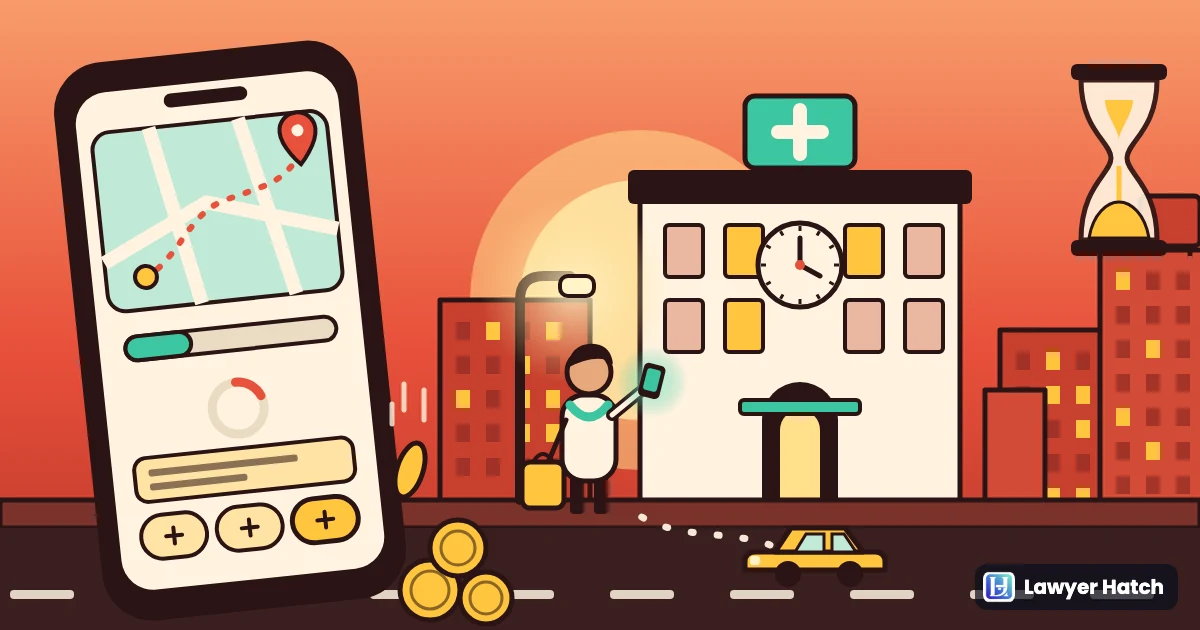
It is 10:40 pm outside a hospital gate in Lucknow. Sunita has just collected her father's discharge papers, the pharmacy bag is heavy, and the cab app has shown a progress bar for four minutes. Then a line appears under the bar: "Adding a tip might help increase the chances of getting a ride faster." Below it sit buttons with pre-set amounts. (Sunita is made up. The prompt is not: it is quoted in the order we are about to read.)
On 10 November 2026 the Central Consumer Protection Authority (CCPA), through Chief Commissioner Nidhi Khare and Commissioner Anupam Mishra, fined ANI Technologies, which runs Ola, ₹10 lakh over prompts like that one and ordered them stopped. Bar & Bench and LawChakra reported the order on 11 November. The CCPA held the prompt to be a misleading advertisement, an unfair trade practice, an unfair contract and a "confirm shaming" dark pattern.
Why should a CLAT aspirant care? The regulator's core reasoning is a dilemma: if paying speeds your ride, that is unfair to everyone who doesn't pay; if it doesn't, the promise is false. Either way the app loses. Logical Reasoning loves that shape of argument. (Our 3 November piece asked who pays when an aggregator's cab hits someone. This one asks what the app may put on your screen before the cab arrives.)
- The order: dated 10 Nov 2026, ₹10 lakh penalty, and a direction to stop prompts asking for extra money before a ride is complete, whatever it is called.
- The dilemma: if the add-on does not affect acceptance, the promise of a faster ride is false. If it does, non-payers are disadvantaged at the very fare quoted to them. Misleading either way.
- Ola's own data: Delhi, about 32% of requests with an add-on accepted against 68% without. Bengaluru, 39% against 68%.
- The label: "confirm shaming", one of 13 dark patterns in the 2023 Guidelines. Rapido was fined the same ₹10 lakh on 15 September.
- Ola's four escape routes were each rejected.
Two horns, one conclusion
In plain logic, a dilemma runs: either A or B; if A then C; if B then C; so C. The CCPA's version, put in my own words, looks like this. Ola's screen told a waiting rider that adding money might raise the chance of a ride. Now take the only two possibilities.
| If the add-on… | Then the promise is… | So the wrong is… |
|---|---|---|
| does not change who gets a ride | false: riders pay for a speed-up that does not exist | a misleading representation |
| does change who gets a ride | true, but only for those who pay. Everyone else sits lower in the queue at the fare they were quoted, and the app never said so | unfair to non-payers, and a concealment, so misleading again |
Notice what the argument does not need. The CCPA never had to decide which horn was true. It only had to show that the two horns cover every possibility, so the representation is misleading "on either footing". The order also caught Ola pulling in two directions: per Bar & Bench, it said tipping does not affect how rides are assigned, and also that customers can tip to improve their chances. Each claim lands on a different horn.
The two numbers, and what they cannot tell you
| City | Accepted, with add-on | Accepted, without | Gap |
|---|---|---|---|
| Delhi | about 32% | 68% | 36 percentage points |
| Bengaluru | 39% | 68% | 29 percentage points |
Both columns come from Ola's own data, as the order used it. Quant habit: the Delhi gap is 36 <i>percentage points</i>, not 36 per cent, and requests without an add-on were accepted about 2.1 times as often (68 ÷ 32).
Logical Reasoning habit: these are <b>acceptance rates</b>, not waiting times, and the table does not say <i>why</i> the gap exists. Ola itself argued that the add-on helped drivers accept unattractive rides, such as a long drive to the pick-up point. If so, add-ons may cluster on the hard rides, and low acceptance would be the cause of the add-on, not its result. That is my reading of the logic, not something the order is reported to say.
Four exits Ola tried, and why each was closed
Every dilemma invites a search for a third door. Ola tried four. Here they are against the order's answers, as reported by Bar & Bench and LawChakra.
| Ola's argument | The CCPA's answer |
|---|---|
| "It is a voluntary tip." | A tip ordinarily thanks someone for service already given. Ola asked for money before any driver had accepted the booking. The prompt also appeared on a progress-bar screen, when the rider is unsure a ride will come at all, which fits confirm shaming. |
| "Every rupee goes to the driver." | Per LawChakra's account, Ola earning nothing from the add-on was not a mitigating factor: the money is collected through its platform as digital payments, and the feature helps keep drivers on the app. |
| "It does not guarantee a quicker ride." | Then the line saying it may improve your chances is false. That is the first horn of the dilemma. |
| "Only a few users are affected." | A dark pattern is not excused by partial success. Over one lakh requests in a single city is not insignificant. |
The order also looked at <i>who</i> sees these screens. Per LawChakra, it noted that Ola's booking data showed pick-ups and drops at hospitals, railway stations, bus terminals and the airport, and that patients, the elderly, travellers with luggage and people alone or out at night are least able to resist a message that payment will secure a quicker ride. Think of Sunita at the gate.
The same test on screens you already use
The CCPA issued the Guidelines for Prevention and Regulation of Dark Patterns, 2023 on 30 November 2023. They list <b>13 specified dark patterns</b>, and per a law-firm summary the examples are guidance only. Four of the thirteen you meet before breakfast. Descriptions below are in my words.
| Pattern | What the Guidelines describe | Where you meet it | A real CCPA order |
|---|---|---|---|
| False urgency | Creating or implying a false sense of urgency or scarcity so that the user acts at once | "Only 1 room left", countdown clocks (the summary notes hotel and flight booking as common settings) | No CCPA order discussed here |
| Basket sneaking | Adding items or payments, such as a donation, at checkout without the user's consent. Necessary fees clearly disclosed at purchase are excluded | A pre-ticked donation or insurance box | PhysicsWallah: a ₹10 donation auto-selected at checkout. Fined ₹5 lakh (PIB, June 2026) |
| Drip pricing | Not showing the full price upfront: parts revealed late or after confirming, or something sold as free that is not | A fare or ticket that grows on the last screen | No CCPA order discussed here |
| Confirm shaming | Using a phrase, visual or sound to create fear, shame or guilt so the user does what the platform wants | A decline button worded as an insult | McAfee: "Renew Now" against "Accept Risk". Fined ₹1 lakh. Also the ride prompts |
Why was the ride prompt confirm shaming and not ordinary pricing? In the Rapido order PIB says the pattern created urgency and fear of losing the ride. It is about <b>pressure at a vulnerable moment</b>, not rude words alone. That order also held a colour-coded price slider (green for paying more, red or orange for paying less) to be a second pattern, "interface interference". Design can push with no sentence at all.
Rapido went first, and Ola took longer
The CCPA examined cab and bike-taxi platforms together. The dates show how long the Ola case ran.
| Date | What happened |
|---|---|
| May 2025 | A complaint about Ola's advance tipping feature reaches the CCPA |
| 28 May 2025 | Show-cause notice issued to Ola |
| 4 July 2025 | At the hearing, the Authority advises Ola to discontinue the practice |
| 24 June 2026 | The feature is still being demonstrated before the CCPA |
| 11 Aug 2026 | Road Transport Ministry writes to all aggregators: no prompt suggesting extra payment can improve ride confirmation before the ride is completed |
| 15 Sep 2026 | CCPA fines Rapido ₹10 lakh. PIB says the examination of Uber and Ola is still on |
| 10 Nov 2026 | Order against Ola: ₹10 lakh and a stop direction |
Rapido's prompts included "Higher the price, higher the chance of getting a ride". PIB says its app quoted a fare and, after the rider booked, urged more because drivers were not accepting. Rapido put no data on record to show that paying more raised the chance of a ride, so the claim was held unsubstantiated. With Ola the data <i>was</i> on record, and it cut against its case. PIB also notes that the 2025 aggregator guidelines allow a tipping feature only <b>after the ride is complete</b>.
Is ₹10 lakh a punishment?
The Consumer Protection Act, 2019 lets the CCPA impose a penalty on a false or misleading advertisement that "may extend to ten lakh rupees", and up to fifty lakh for each later contravention. So ₹10 lakh is the ceiling for a first offence, and LawChakra reports the order describing it that way.
In fixing the amount the Act tells the CCPA to weigh four things: the population and area affected, how often and how long the offence went on, how vulnerable the people hurt are, and gross revenue from the offence. The order, as reported, ticks each: over a lakh requests in one city, a practice running well over a year after notice, patients and travellers at hospitals and stations, and standalone revenue from operations of about ₹1,060 crore in 2024-25.
Do the arithmetic. ₹1,060 crore is 1,06,000 lakh, and 10 ÷ 1,06,000 is about 0.0094%. The order says the penalty is under 0.01% of that revenue and that any lower amount would not deter a platform of Ola's size. Make the argument from both sides. A cap that small against that revenue may not frighten a large platform. But the CCPA could not go higher on a first contravention, so the stop direction, and the signal it sends to other platforms, may matter more than the money.
Five screens to test yourself
No long passage this time. Each question is its own small scene, with the rule inside it.
The regulator's reasoning is best described as:
▸ Show solution
Which statement, if true, most weakens Rohit's conclusion?
▸ Show solution
Which part of the ₹630 is basket sneaking under the rule?
▸ Show solution
Under the relaxed position, which screen is most likely to be allowed?
▸ Show solution
Which assumption does the platform's argument depend on?
▸ Show solution
Keep going
Sources
- Bar & Bench: Ola's extra pay for faster rides feature doesn't work, CCPA asks it to scrap practice, slaps ₹10 lakh penalty (11 Nov 2026)
- LawChakra: CCPA slaps ₹10 lakh penalty on Ola, orders scrapping of advance tip prompts as dark pattern (11 Nov 2026)
- PIB, Ministry of Consumer Affairs: CCPA imposed ₹10 lakh penalty on Rapido for misleading tipping prompts and dark patterns (15 Sep 2026)
- PIB: CCPA acts against dark patterns on digital platforms, PhysicsWallah and McAfee (3 Jun 2026)
- PIB: CCPA issues Guidelines for Prevention and Regulation of Dark Patterns, 2023, listing 13 specified dark patterns (8 Dec 2023)
- Trilegal: Guidelines for Prevention and Regulation of Dark Patterns, 2023 (summary of Annexure I, 26 Dec 2023)
- The Consumer Protection Act, 2019 (Gazette of India text), sections 2(28), 2(46), 2(47), 10, 18, 20 and 21. We have not seen a PIB release on the Ola order, so its details rest on the two reports above.
Frequently asked questions
What did the CCPA order against Ola say?
Why did the CCPA say the prompt was misleading either way?
What is confirm shaming?
Is tipping a driver before the ride allowed in India?
How much can the CCPA fine for a misleading advertisement?
Keep reading